
Bona Recoating
This page helps you understand when each method is appropriate for wood and resilient floors, how they work, and how they fit into a broader floor lifecycle strategy.

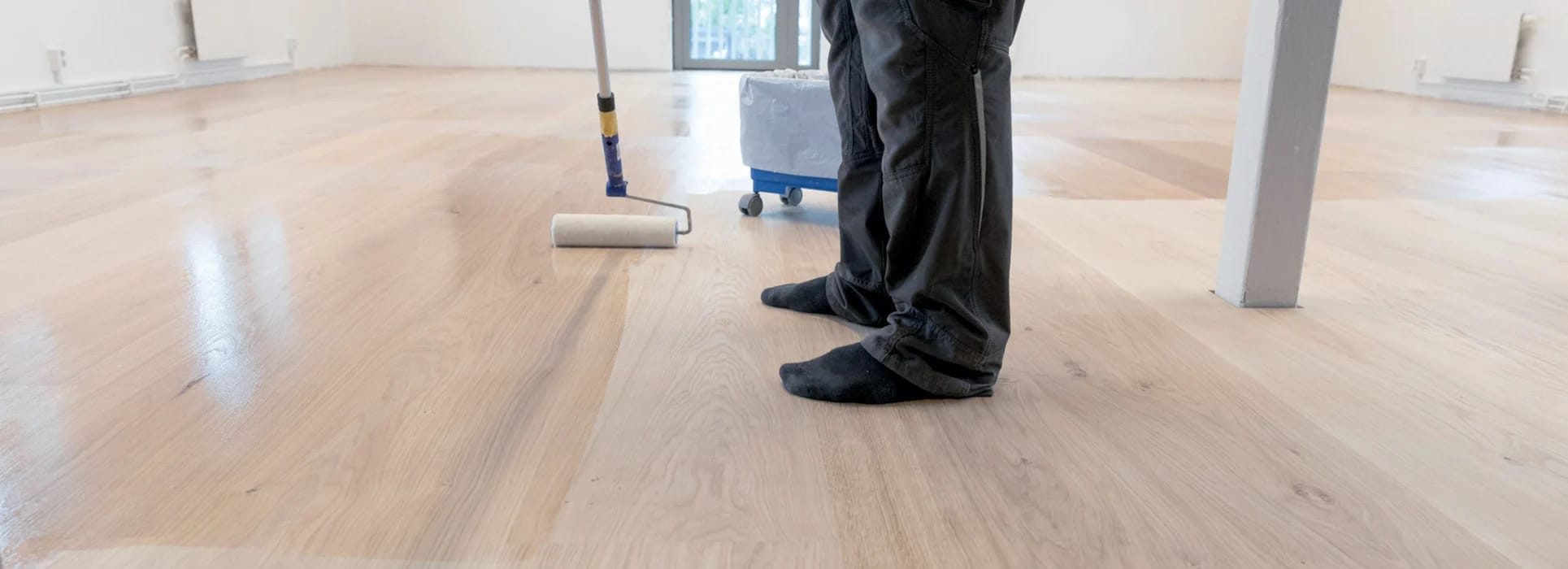
Bona Recoating
This page helps you understand when each method is appropriate for wood and resilient floors, how they work, and how they fit into a broader floor lifecycle strategy.
Recoating wood and resilient floors
A renewed surface can be completed in just a few hours, without the disruption, expense, or complexity of a full renovation. The process includes light sanding using Bona FlexiSand 1.9 and Bona Diamond Abrasives to create a smooth, even surface, followed by the application of Bona Traffic HD or Bona Pure HD for long-lasting, high-performance results.
Wood
When the top layer of a wood floor’s protective surface is stained or showing scratches, a recoat will effectively restore its beauty.
The Bona Diamond Abrasives prepare the surface by removing scratches and wear. Then, the perfectly smooth sanded surface can then be recoated with Bona Traffic HD, giving the floor a new layer of durable protection with perfect adhesion to the layer beneath.
Resilient
We call it recoating, but you might as well call it a 'brand new floor'. Regardless of the surface, the results are simply outstanding.
With the Bona Commercial System, you can transform existing resilient floors in linoleum, PVC, Vinyl (LVT) and rubber. This method restores the resilient surface to its original state, maintaining the existing colour of the floor.
The process: various floor types
Lacquered floors
Add a new layer of protection in a fraction of the time of a full renovation.

Step 1 - Preparation
Remove all furniture from the area to be treated. Use a Bona Dusting Pad or a vacuum cleaner to remove dust and debris from the floor.

Step 2 - Deep-cleaning
Degrease and clean the surface thoroughly using the Bona PowerScrubber (green brushes), with Bona Deep Clean solution diluted in the tank (with a ratio of 1:10). Make sure that there's no excess liquid on the floor, and let it dry.

Step 3 - Fine sanding
Abrade the surface with the Bona FlexiSand, using Bona Diamond Abrasives (grit 120 or 240). Attach the abrasives to a Quatto Disc, or a Multidisc with intermediate pads in between. Abrade corners and edges with a Bona SupraFlex. If the surface has any polish or wax on it, keep going until it's been removed. Vacuum-clean to remove loose sanding dust, or wipe it away with a Bona Dusting Pad.

Step 4 - Finish application
Apply 1-2 more layers using a roller or T-bar (8-10 m2/lit). Allow it to dry completely before allowing traffic to resume.
Oiled floors
Make a dull oiled floor come alive again. Restore its glow, and prolong its life.

Step 1 - Preparation
Remove all furniture from the area to be treated. Use a Bona Dusting Pad or a vacuum cleaner to remove dust and debris from the floor.

Step 2 - Deep-cleaning
Degrease and clean the surface thoroughly using the Bona PowerScrubber (red brushes), with Bona Deep Clean solution diluted in the tank (with a ratio of 1:10). Make sure that there's no excess liquid on the floor, and let it dry.

Step 3 - Bona Oil Care application
Pour Bona Oil Care (40-60 m2/lit) onto the floor, and distribute it evenly, using the Bona FlexiSand with a Bona Wool Pad attached. Add more oil as required. Manually apply oil to edges and corners - and other areas that the FlexiSand can't reach. For the best results, buff the floor one last time, using a dry Bona Wool Pad. Allow 12 hours before allowing traffic to resume.
Hard-wax oiled floors
Restoring a floor’s beauty is now an overnight job.

Step 1 - Preparation
Remove furniture from the area, and use a Bona Dusting Pad or a vacuum cleaner to remove dust and debris.

Step 2 - Deep-cleaning
Degrease and clean the surface thoroughly using the Bona PowerScrubber (green brushes) with Bona Deep Clean Solution diluted in the tank (1:10). Ensure that there's no excess liquid on the floor, and let it dry.

Step 3 - Fine sanding
Abrade the surface with the Bona FlexiSand, using Bona Diamond Abrasives (grit 120 or 240). Attach the abrasives to a Quatto Disc, or Multidisc with intermediate pads in between. Abrade corners and edges using a Bona SupraFlex. If the surface has polish or wax on it, abrade until it has been removed. Vacuum-clean to remove loose sanding dust, or wipe it away with a Bona Dusting Pad.

Step 4 - Hard-wax oil application
Using a Bona Microfibre Roller 5 mm, apply an even, thin coat of Bona Hard Wax Oil to the entire floor (20-24 m2/lit). Avoid accumulation of the product. Follow the direction of the grain where possible. Allow to dry for at least 12 hours before allowing traffic to resume.
Resilient floors
Add a new layer of protection in a fraction of the time of replacement.

Step 1 - Prep
Start by thoroughly cleaning the surface with Bona PowerRemove R and Bona Power Scrubber, which strips polish, dirt, and old cleaning residue in preparation for renewal.

Step 2 - Dry sanding
Use Bona Diamond Abrasives and Bona FlexiSand 1.9 for light, superficial sanding to create a uniform surface and ensure proper adhesion of the new coating.

Step 3- Coating
Finish by applying Bona Pure HD, a hard-wearing, hard-elastic PUR coating designed to restore appearance and deliver durable surface performance.