
EMICODE®, EPD’s and green building

EMICODE®, EPD’s and green building
Our Environmental work goes beyond EMICODE®
Clear standards for environmental impact
To comply with green building certification schemes such as BREEAM and LEED, all environmental aspects must be taken into account. For flooring products, the most important aspect is to meet the EMICODE® requirements for emissions.
To contribute to sustainable building processes, architects, planners, and builders needcomplete and fully transparent information on all the properties and environmental impacts of construction materials in a building. The tool often used for this is EPDs (Environmental
Product Declarations), which communicate the results of the life cycle assessment of products in the construction industry and support the evaluation of sustainable buildings.
EN 15804 is a European standard that lays down the basic rules for producing EPDs for building products and construction work. This standard defines the parameters to be declared, the phases of a product’s life cycle to be included and the rules for developing scenarios.
Bona provides EPDs for our silane adhesives, assuring architects and project managers that the building components meet the overall requirements of green building certification systems.
*The Institut Bauen und Umwelt e. V. (IBU) is an association of building product manufacturers who have joined forces to operate an international environmental product declaration programme.
Environmental product declaration (EPD)
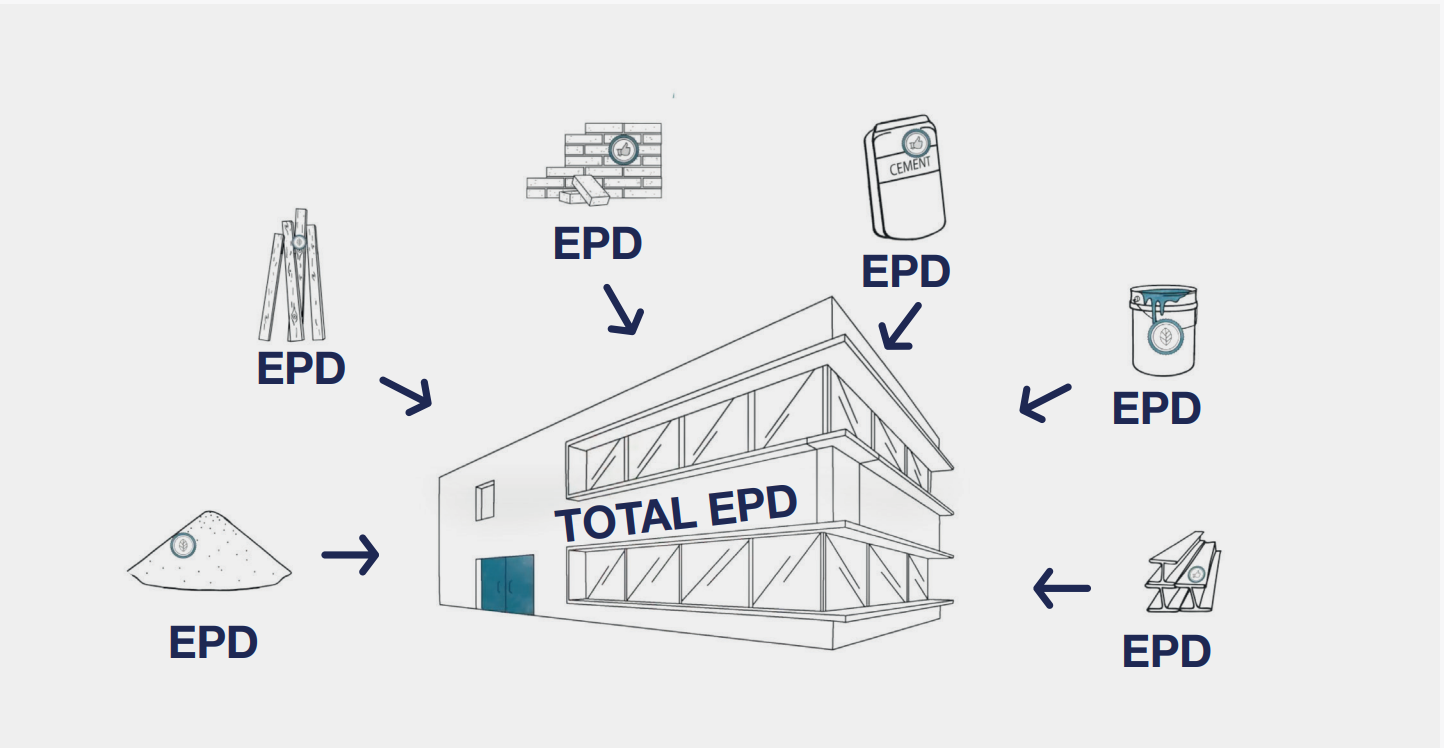
EPDs are based on Product Category Rules (PCRs), decided by experts and public bodies, which define the requirements of the EPD and the data needed. The PCR enables manufacturers to create an EPD for their product based on the relevant building material group.
This allows manufacturers to declare all product data from the production of raw materials to the end of the building’s life. The EPDs are a source of clear information about a product’s ingredients and environmental impact throughout its life cycle, based on international standards.
Green building certification schemes
Green building certification systems are a set of rating schemes and tools that are used to evaluate a building’s or construction project’s performance from an environmental and sustainable standpoint. The ratings are intended to raise the standard of buildings and infrastructure overall, incorporate a life cycle approach into the design and construction process, and encourage the construction sector to contribute to the achievement of the Sustainable Development Goals of the UN.

GREENGUARD
GREENGUARD certification is a US-based certification through UL Solutions and means that the product has met industry standards for low emissions. Greenguard certification means that a product is safe for indoor use.

GREENGUARD Gold
Greenguard Gold is even more stringent. It includes health-based criteria for additional chemicals and also requires lower total VOC emissions to ensure products are acceptable for use in environments such as schools and healthcare facilities.

LEED
LEED is an internationally recognised sustainable building rating system developed by the U.S. Green Building Council. It evaluates the environmental performance of buildings in several categories such as energy efficiency, materials and resources, indoor air quality and site selection.

BREEAM®
BREEAM® is a globally recognised sustainable building certification system. One of the BREEAM® evaluation criteria is the choice of flooring adhesives that are not harmful to the environment or the health of users.

A+
Construction, decoration and furnishing products intended for sale in France must be labelled with this emission classification based on VOC emission tests. This label must be applied in addition to the CE label (if required for the product). The tests are based on ISO 16000.
Sustainable building

EC1, EC1PLUS, and GreenGuard-certified products meet the requirements of BREEAM® and LEED. These certification systems take ecological aspects into account and evaluate coatings and adhesives primarily based on their emissions, i.e., not on their properties but on their impact on the building. The reason for this is the recognition that the environmental impact caused by the production and supply of coatings is insignificant compared to that of other building materials.
With EMICODE®-certified building products, it is also possible to meet the planned ventilation requirements of the residents. There is no need for additional active ventilation in summer or winter, with the associated higher energy demand for cooling or heating.